
March 25, 2026
NEWSLETTER
Illegal mining: Between risk and survival
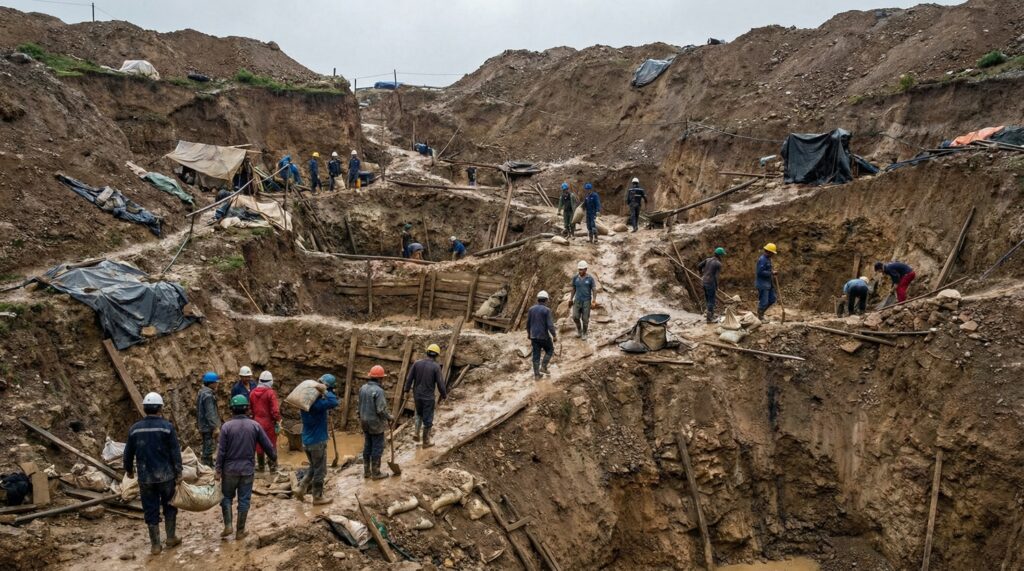
Illegal, artisanal or small-scale mining is often perceived as a marginal or fringe activity. In reality, cross Africa, Latin America, and Asia it represents a vast and deeply embedded economic system, supporting tens of millions of people worldwide. In some countries, such as Venezuela, estimates suggest that up to half a million people are directly involved in informal or illegal mining activities.
For many communities, this is not opportunism—it is necessity. In some regions where jobs are scarce, artisanal mining becomes one of the few viable sources of income. It is, quite literally, a survival strategy.
Yet the same activity that sustains livelihoods also feeds into a complex and often dangerous shadow economy.
In parts of West Africa, for example, gold mining has become intertwined with security dynamics and regional instability. Evidence shows that mining areas can serve as sources of financing, logistics, and recruitment for violent extremist groups, which tax miners, control supply chains, or directly participate in gold extraction and trade. The opacity of gold flows and the lack of traceability further amplify risks of money laundering and illicit financing. What begins as a local economic activity can, in such contexts, evolve into a strategic asset within broader conflict ecosystems.
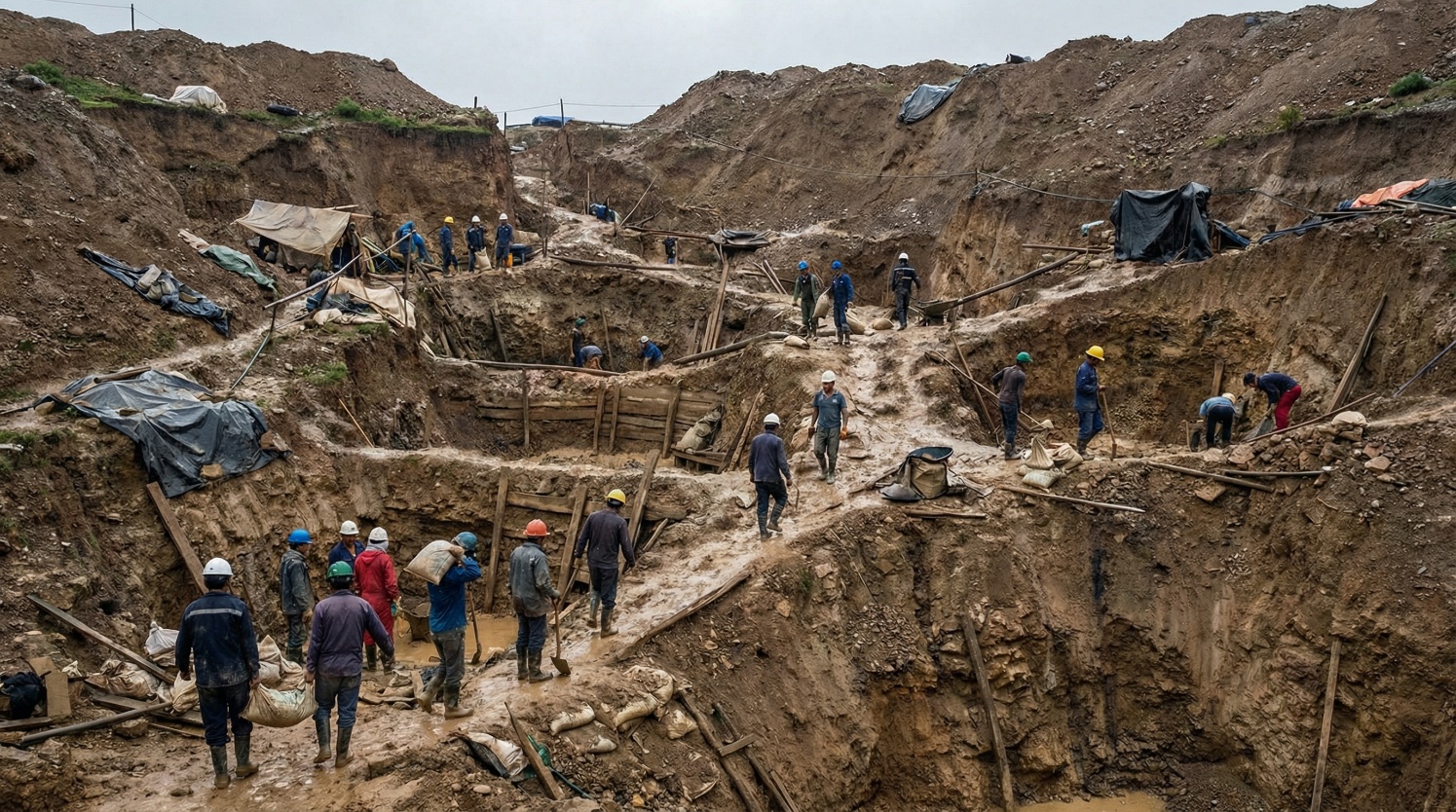
The human cost of illegal mining is equally stark. Without formal oversight, safety standards are minimal or entirely absent. Mines are often shallow, unstable, and poorly ventilated. The use of rudimentary techniques and improvised tools exposes workers to constant danger.
As a result, accidents are frequent and often deadly. In Indonesia alone, more than a hundred accidents were recorded in illegal mining sites over recent years, many resulting in fatalities. In 2024, a landslide at an illegal gold mine in West Sumatra killed at least 15 miners, while another collapse in Sulawesi left dozens dead or missing. In Venezuela, the collapse of the Bulla Loca mine—an open pit crowded with informal workers—resulted in multiple deaths, highlighting once again how fragile and dangerous such operations can be.
These tragedies are not anomalies; they are symptoms of a system operating without proper control and accountability. As artisanal mining grows in scale, often becoming semi-mechanised and more intensive, the risks increase accordingly. What was once small-scale becomes structurally hazardous. And while operating mine is the responsibility of an operator, failed mine is the responsibility of a government.
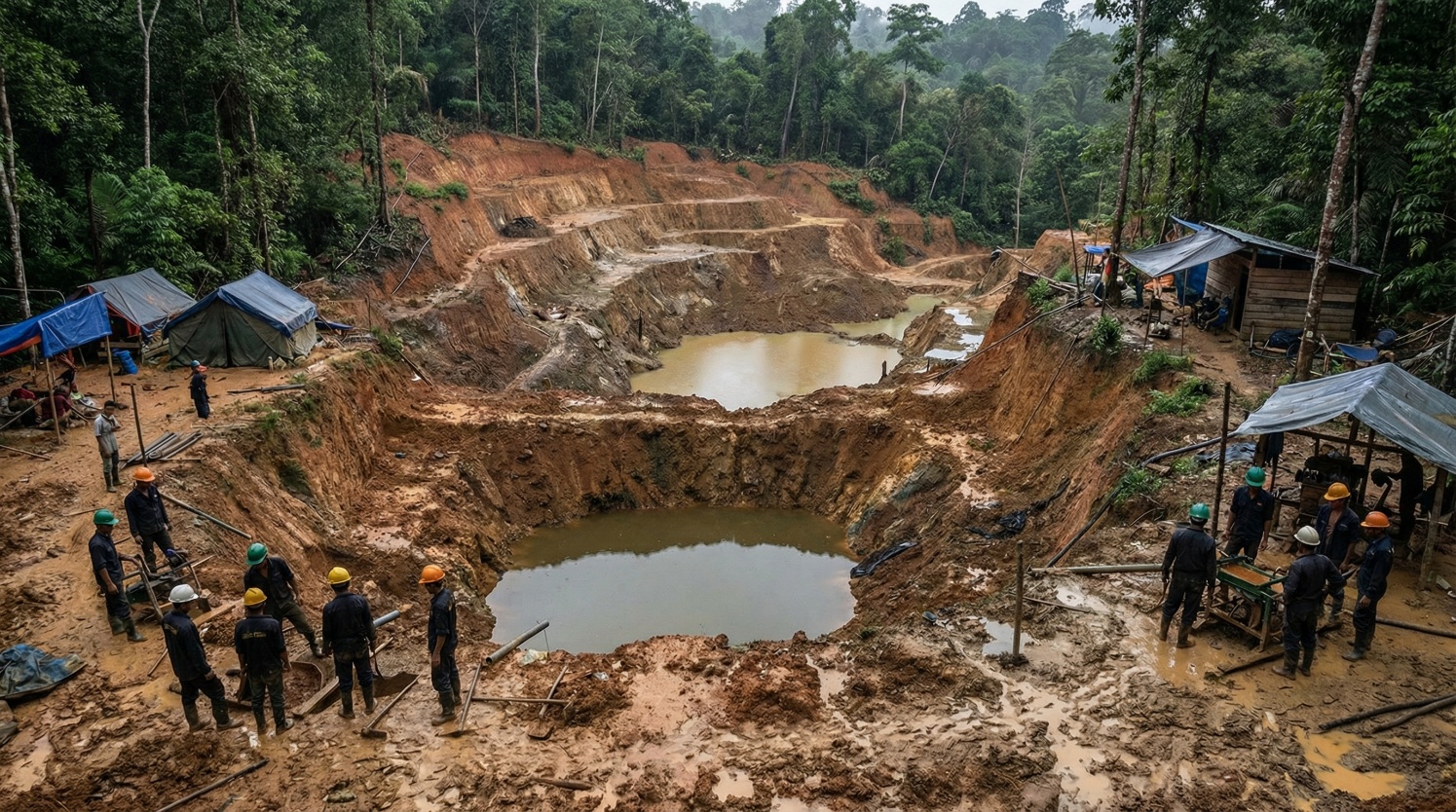
The environmental consequences are no less severe. Artisanal and illegal mining is today considered the largest global source of mercury pollution, with toxic substances released directly into soils and waterways. Entire landscapes are transformed: forests cleared, rivers diverted, and ecosystems disrupted. Remote sensing analyses consistently show extensive deforestation, soil degradation, and water contamination linked to mining activity. In many regions, particularly in tropical environments, thousands of hectares of forest have been converted into mining zones within just a few years.
Perhaps most critically, there is almost never any form of rehabilitation or land restoration once mining ceases. The result is long-term environmental damage that can persist for decades, affecting agriculture, water quality, and biodiversity.
As global demand for minerals continues to rise—driven by both traditional industries and the energy transition—artisanal mining is expanding. Higher commodity prices make even low-grade deposits economically viable, attracting more workers and increasing pressure on land and resources. In some regions, illegal mining has evolved into a multi-billion-dollar informal economy, embedded in complex supply chains that are difficult to trace or regulate.
Governments face a profound dilemma. On one hand, artisanal mining provides income to populations that might otherwise have none. On the other, it generates significant environmental, social, and security risks. Attempts to ban or suppress illegal mining often prove ineffective. Sites are remote, mobile, and quick to reappear. Enforcement is costly, logistically difficult, and sometimes socially contested.
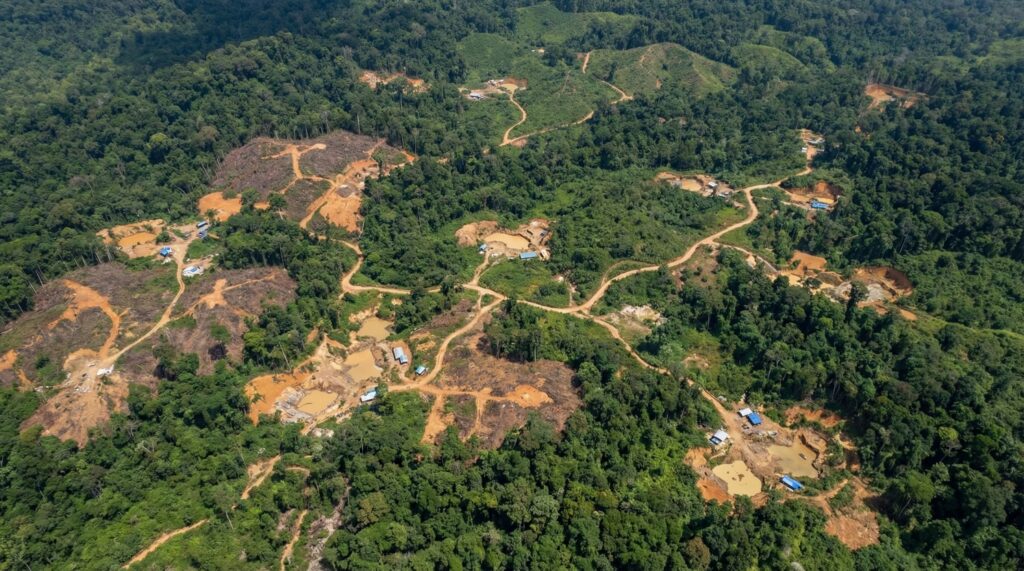
This is where technology—particularly satellite-based Earth Observation—can play a transformative role. Unlike traditional monitoring methods, satellite data offers global, repeatable, and independent coverage, capable of detecting activity even in remote or inaccessible regions. By combining SAR, InSAR, optical, and spectral imagery, it is now possible to identify illegal mining sites, track their expansion over time, and assess their environmental footprint. Changes in land cover, deforestation patterns, and water quality can be monitored systematically, while terrain deformation analysis can provide early indications of instability and potential collapse.
Remote sensing has already demonstrated its ability to detect and monitor mining activity at scale, mapping thousands of sites and quantifying environmental impact. GeoKinesia, in particular, has developed some effective algorithms, which allow to detect mining sites, even clandestine ones and perform high level preliminary analysis of its geotechnical safety and sustainability. What it offers is not enforcement, but something equally important: visibility.
And visibility is the prerequisite for effective action. By providing governments, international organisations, insurers, and industry stakeholders with consistent and objective data, satellite technologies can support better decision-making. They enable prioritisation of interventions, monitoring of compliance, and early identification of emerging risks. In a domain where opacity has long been the norm, this represents a significant shift.
Illegal mining will not disappear. It is too deeply tied to economic realities and global demand. But it can be better understood, monitored, and ultimately better managed. And increasingly, that path begins from space.